

James Hazzard is the Director of Learning and Teaching/ Deputy Head of School for Education and Childhood. He supports the strategic and operational development of the School. In this post, he looks back on a year of managing the the Higher Education Matters vodcast series.
Introduction
It has been 12 months since the School of Education and Childhood piloted the concept of sharing best practice through the medium of vodcasts. Vodcasts are simply ‘videos of a podcast’. I am hoping people have been able to see the vodcasts on the School of Education and Childhood‘s YouTube channel, if not, do take a look. You can read more about the establishment of the series in this article by Clay Johnson: Higher Education Matters: Using vodcasts to foster a community of practice.
Having worked in education for 20 years, it is noticeable that educators truly value learning, developing and embedding new forms of pedagogies into their own practice. Much of this new knowledge is acquired from days dedicated to continued professional development, such as Learning and Teaching Conferences. With the increased demands on being a lecturer/ manager in higher education, the willingness to learn from one another is still omnipresent. What there is however, unfortunately, is a paucity of time.
As an avid follower of online education, news or political content, I find myself listening to vodcasts when commuting to work, training in the gym or even doing house work! Whilst I do not watch all the videos per se, their content, through the form of conversation, is easily digestible and allows perspectives to be challenged and debated via a device in my pocket and a set of earphones. It opens up an accessible form of education that people can embed into their busy lives.
So why, then, choose a vodcast and not a simple podcast, one might ask? Well, UWE is a large institution spanning multiple schools, colleges and professional services – but we all share a physical space, walk past one another in the corridors or sit opposite each other in one of UWEs many cafés or restaurants. I aspired to put a name to a face, promote dialogue, open new forms of collaboration and discourse and, ultimately, to make UWE a ‘smaller’, more gregarious organisation.
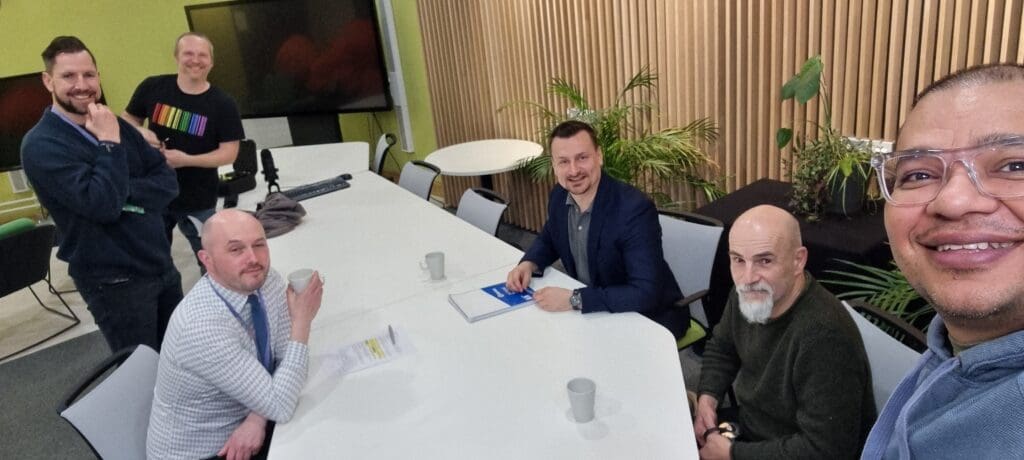
The ethos of the vodcast was to explore and discuss learning and teaching, but through the experiences of the Higher Education Matters leadership team of myself, Clay Johnson (Digital Learning Manager: College of Business and Law) and Antony Hill (Dean of Learning and Teaching: College of Heath, Science and Society), it has evolved into much more.
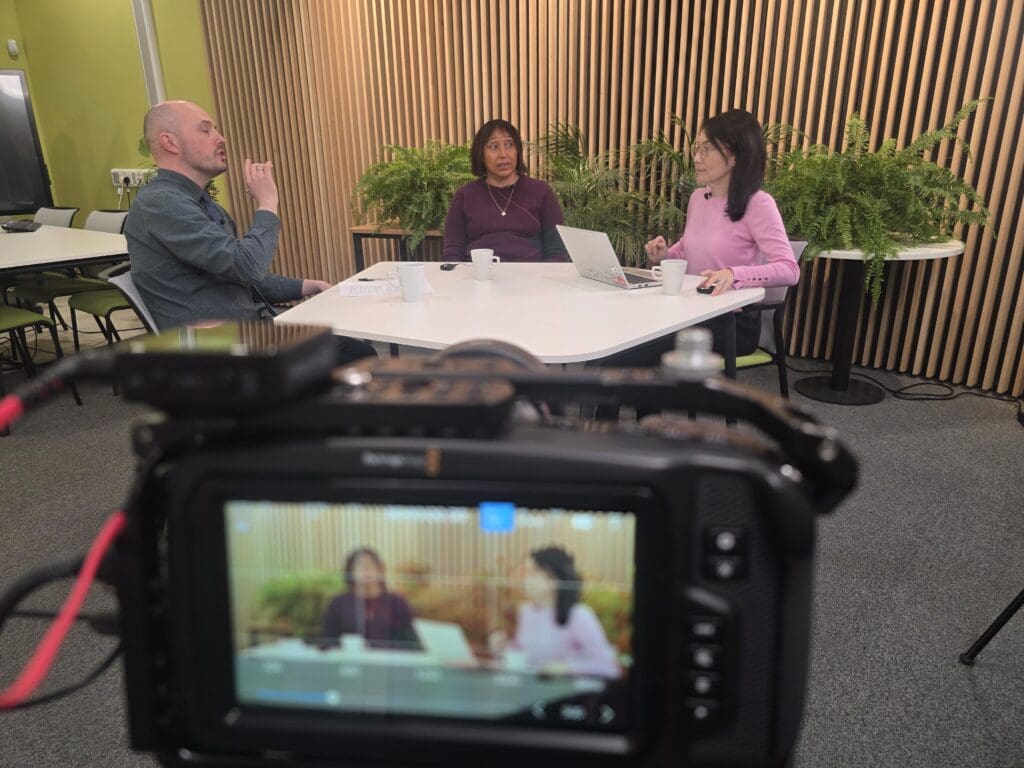
To date, the series has hosted episodes on inclusive assessment, artificial intelligence, international partnerships, the evolution of the student experience and simulated learning, to name a few. The channel has amassed more than 35,000 views internationally and has nearly 200 subscribers. We have an array of episodes lined up for 2025/ 26.
Our methodology: staff-led
Whilst led by the School of Education and Childhood, Higher Education Matters is not, and has never been, isolated to a school or a college – it is a UWE-wide resource. It is essential that the channel is accessible to all, as well as offer the opportunity to contribute to it. To achieve this, we put out an expression of interest to colleagues who have an innovative idea, want to provide feedback on something that is working, debate reasons why it might not be working, or share their educational story with like-minded individuals.
This strategy has opened discussion topics that are unique and inspiring. The team meets with the proposed member of staff, establishes a set of discussion themes and are then videoed engaging in that conversation. There is no script or interview style – it is open dialogue and the conversation goes where it goes.
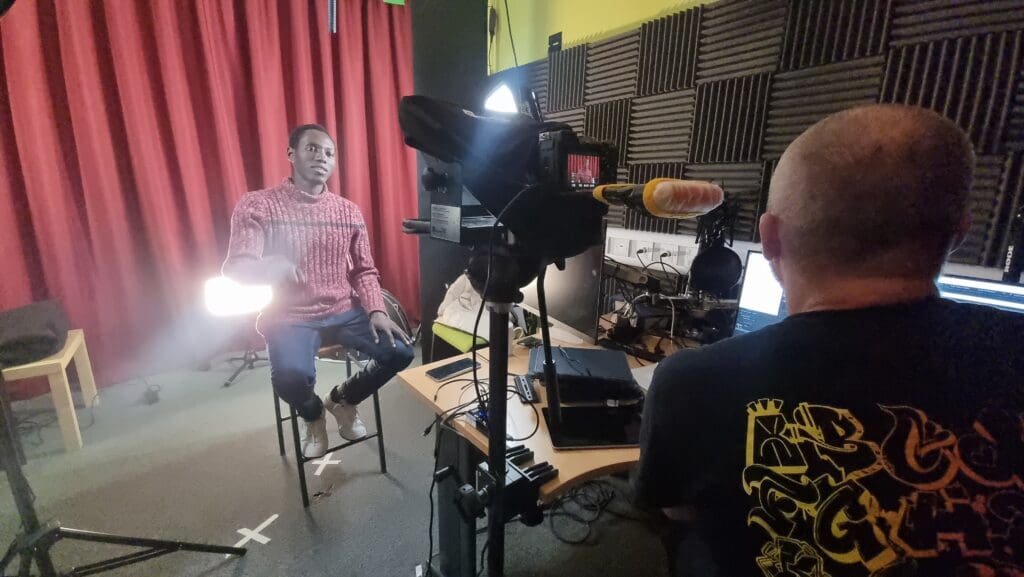
The technical setup, led by technician Tom Baldry, includes a set of video cameras, microphones and lighting rigs. All of which provides, a professional and highly watchable experience.
What have we learned and where is it going?
On reflection, we are delighted with the reception that Higher Education Matters has received and the feedback we have had from participants and viewers has been overwhelming. But, like teaching, it is about learning on the job and reflecting on where we want the direction of the vodcast to go. Here are a few thoughts on the story so far:
Environment
All of our episodes have been filmed within studio spaces across our Frenchay and Bower Ashton campuses. These provide a professional and private space that lends itself to good production values. It is, however, contrived and not how UWE colleagues work day-to-day. It is our aspiration to diversify the production and experiment with different production settings. For example, academics do not develop new ideas and share best practice in a closed room – they do this in a coffee shop, a staff room, a corridor. Because of this, we are hoping to record an episode in one of our onsite cafés, with students and staff going about their day in the background; this mirrors real-life conversations that colleagues are likely to have.
Fully accessible participation
So far, the episodes are academic staff talking about academic matters. This is not reflective of the variety of roles within the university. We have recently taken requests from professional services, such as Careers and Disability Services offering invaluable content for lecturers to better support their students.
Students should be at the heart of everything we do, and Higher Education Matters is no different. The team are attempting to set up an episode with up to eight students and a host, where we can explore themes such as student life, the challenges students’ face and the support they need to overcome these challenges.
UWE works with hundreds of external partners that are integral to the experience we offer our students. Each of these partnerships is unique and offers innovative ways of collaborating with one another – experiences that can be shared and built upon. This year we are opening up the vodcast to external audiences to provide a fully inclusive experience.
Conclusions
On behalf of myself, Clay, Antony and Tom, as well as the range of guests we have had on the vodcast, we are delighted with the results and impact we have had. The channel needs to continue to grow and we need inspiring UWE colleagues, students and partners to share the exceptional practice they engage with. To do this we need content, we need views, and we need subscribers. By diversifying our product, marketing it appropriately and opening up the vodcast to wider audiences, we can achieve this objective. We hope that 2025/ 26 will see the continued success of Higher Education Matters as an educational medium that can share UWE best practice both inside and beyond the borders of the institution.