
Students as active partners in shaping digital capability
At UWE Bristol, digital capability is not just something we deliver, it’s something we co-create. The Student Digital Leaders (SDL) programme places students at the heart of this approach. SDLs act as active partners in shaping digital confidence across the university. They bring lived experience, creativity and insight into how digital tools are used in real study contexts.
What the programme looks like in practice
Student Digital Leaders work across the university to design and deliver digital capability activities that resonate with their peers.
Their work includes:
- Leading sessions on digital tools, including AI
- Supporting new students to build their confidence in key systems
- Helping students develop creative outputs
- Creating peer-facing content such as podcasts and social media
This work is not predefined. SDLs shape the focus, format and delivery of activities, ensuring that digital capability is grounded in real student needs and experiences.
A key development in the next phase of this programme is a shift in delivery spaces. Earlier activity was based in a more isolated environment, which made engagement more difficult. By moving into more central library locations, the programme is poised to become more visible and accessible, making it easier for students to engage informally as part of their everyday study experience.

Co-creation at the core
Co-creation sits at the centre of the SDL model.
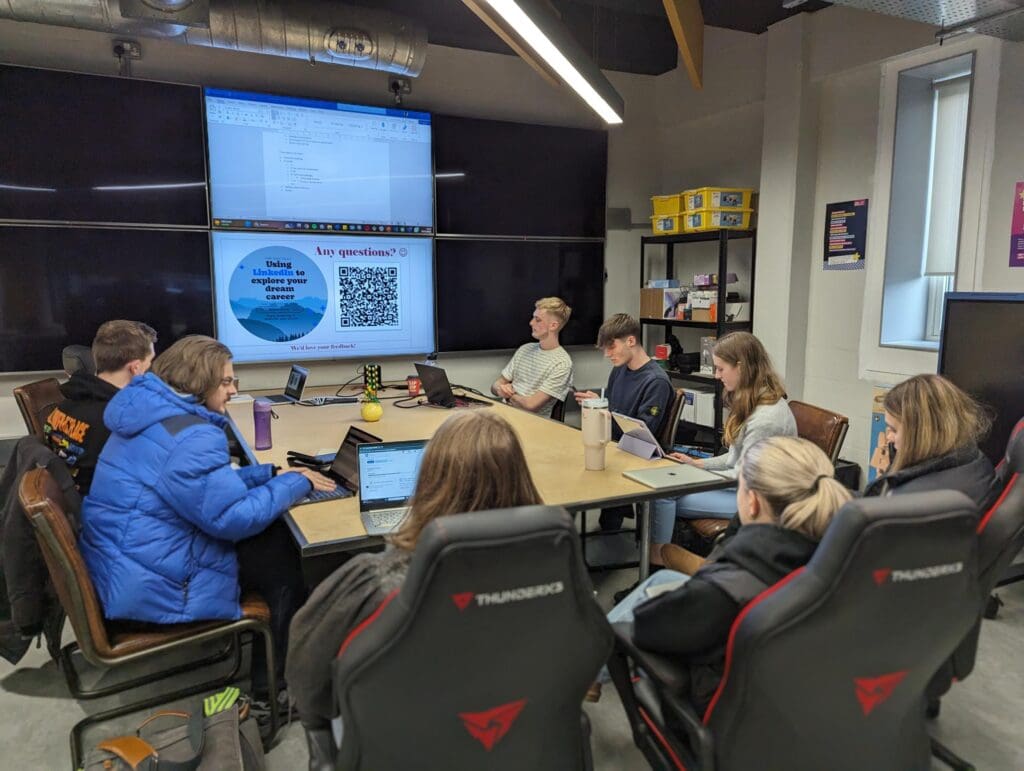
Student Digital Leaders play a direct role in identifying priorities, shaping sessions and refining approaches based on feedback and conversations. This ensures that the activity reflects authentic student perspectives rather than assumed needs.
It also positions SDLs as contributors, testing ideas, exploring new tools and influencing how digital capability is supported at UWE.
For example, SDLs identified that face-to-face delivery was only part of the picture when it came to reaching other students, particularly given the space limitations described above. In response to this challenge, the SDLs turned to an area they knew their peers would find accessible and engaging: social media and podcasts.
SDLs created Instagram infographics and reels to deliver quick tips and signpost UWE students to resources. After engaging staff for some upskilling in Adobe Podcast, they also began releasing podcast episodes, delivering bite-sized advice on topics such as digital safety and AI: UWE Student Digital Leaders – Tech Tips in 5. SDLs drafted the content, set design and branding parameters and collaborated with staff to manage Instagram and Spotify accounts.
The SDLs have then gone on to support other student podcasting projects at UWE (e.g. the Student Advocate-led Widening Participation Podcast) by training peers in Adobe Podcast.
The Digital Leaders are also involved in the Higher Education Vodcasts which bring together staff, students and external voices to explore the ideas, challenges and practices shaping contemporary higher education: HE Matters

Mentorship enabling impact
To further support the work our Student Digital Leaders do, the SDL programme is evolving to include stronger mentorship and team structures. Feedback from previous years’ SDLs highlighted the challenges of isolated working and limited confidence without consistent support.
This year, the programme is incorporating structured mentoring from Digital Learning staff. Student Digital Leaders will be paired with Digital Learning Designers from their particular College, allowing sessions to be tailored specifically to students’ experiences and goals within their own disciplinary context. Regular coaching sessions following the GROW model will offer a conversational framework that empowers SDLs to identify their goals and strategise and how to action them.
Peer-led learning – influencing both students and staff
A key strength of the programme is its peer-led nature. Students often engage more readily with other students, particularly when exploring new or emerging digital practices.
However, the impact goes beyond peer support. SDLs also contribute to staff understanding by sharing student perspectives, demonstrating tools and influencing practice.
This creates a two-way model of learning where:
- Students build confidence, skills and employability
- Staff gain insight into evolving student digital practices
- The university develops more relevant and responsive approaches

For example, SDLs have become involved in UWE’s VLE Working Group, offering a student perspective on breaking developments in the virtual learning environment space. This ensures that students are shaping the conversation around VLE implementation projects, such as improvements to Blackboard module templates, from an early stage.
Student Digital Leaders have also joined panel discussions about AI and the UWE RISE event for staff, sharing their experiences and insights when it comes to key conversations about AI in Higher Education.
What comes next
This post introduces the Student Digital Leaders programme as a model for student partnership in digital capability.
In the next posts in this series, we will explore in more detail:
- Co-creation – how students actively shape digital confidence, practice and innovation
- Mentorship – how structured support enables students to lead and influence
- Peer-led learning – how students support each other and contribute to staff development
Email: digitallearning@uwe.ac.uk
Website: go.uwe.ac.uk/digitalleaders