

Dr Abhinesh Prabhakaran is a Lecturer in Building Information Modelling and Module Leader for BIM in Construction Operations at the University of the West of England (UWE). He led this initiative to strengthen student engagement and promote independent learning through the use of interactive video quizzes and a hybrid teaching approach that reflects industry-relevant digital practices.
This case study focuses on the BIM in Construction Operations (BIMCO) module, a postgraduate course (cohort ≈ 113 students). The module includes morning theory sessions and afternoon practical workshops, supported by digital learning resources through Blackboard Ultra and Panopto.
The problem
The existing approach for delivering the BIMCO module combined morning theory sessions with afternoon computer-based practical workshops. To help students prepare, pre-recorded video demonstrations were made available before each practical session. However, engagement data revealed that most students were not accessing or viewing the materials prior to class. As a result, tutors often had to repeat the same content during the lab sessions, limiting opportunities for deeper learning and discussion.
This situation highlighted a critical pedagogical weakness: students were becoming overly reliant on in-class demonstrations rather than taking ownership of their learning. At the postgraduate level, where learners are expected to develop autonomy and problem-solving ability, this lack of self-directed engagement was concerning. The team also recognised that in industry, professionals frequently need to acquire new digital skills through online resources and self-study which is something our current model did not encourage.
In addition to these learning challenges, the large cohort size (113 students) created logistical and resource constraints. Running multiple lab sessions required significant staffing and space, making timetable increasingly difficult. Collectively, these issues prompted the need for a new teaching strategy that could both strengthen independent learning and make delivery more efficient across a large cohort.
The solution
To overcome the challenges identified, a blended learning model was developed that combined interactive digital content with structured in-person support. Using Panopto and Blackboard Ultra, a series of short quizzes were embedded within each pre-recorded practical video to encourage active engagement before class and to check students’ understanding of key concepts.
Each video was linked to the Blackboard Gradebook, enabling tutors to monitor student engagement and comprehension levels in real time. The quiz results contributed a percentage to the overall engagement with digital resources mark, creating a clear incentive for students to participate meaningfully in the preparatory activities.
In this brief excerpt from one of the videos the quiz appears after approximately 12 seconds.
Try it for yourself.
Traditional three-hour computer lab sessions were replaced by mandatory 20-minute drop-in group tutorials. During these sessions, students were encouraged to raise questions, clarify technical issues, and apply the knowledge gained from the video resources. This structure ensured that contact time focused on deeper learning, critical thinking, and practical application rather than repeating the content of the recordings. The redesigned approach improved delivery efficiency, reduced the demand for multiple lab spaces, and promoted greater student independence and accountability which are key attributes for professionals in the construction sector.
Challenges
Several challenges were encountered during the development and implementation of this new teaching approach. The first major hurdle involved dynamically linking quizzes with the Panopto videos. Initially, the team explored the use of Xerte tool to integrate video content and quiz elements, but the process was complex, and the final interface lacked user-friendliness.
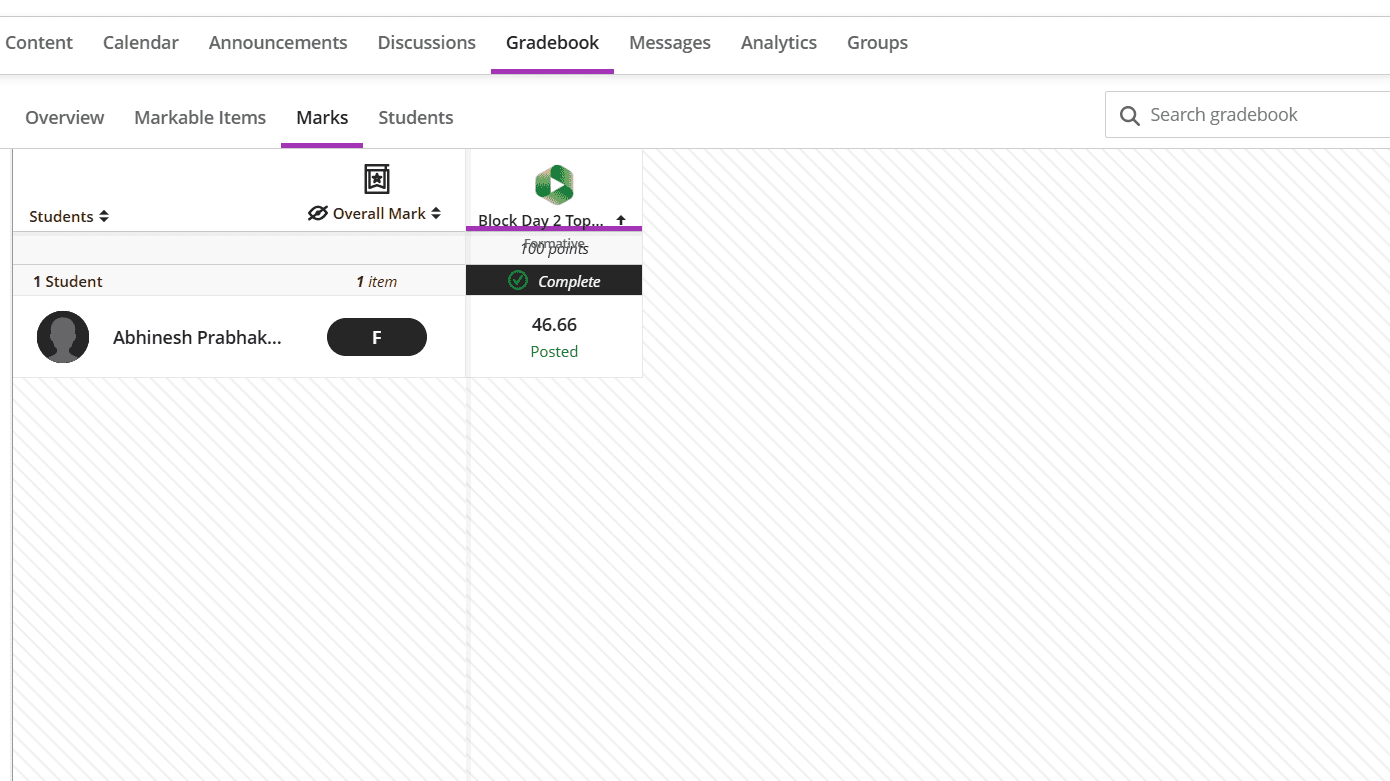
Students’ scores from the quizzes are reported in the Gradebook allowing staff to monitor understanding and engagement
Following further trials, the Panopto native quizzing feature was adopted as a more intuitive and reliable solution. A second key challenge was ensuring that the Panopto quizzes could be linked seamlessly to the Blackboard Gradebook. This integration was critical to monitor student engagement and assess understanding effectively. Achieving this required exploration of the Blackboard Ultra support documentation and collaboration with the Digital Learning Team to refine settings, automate grade capture, and maintain accessibility for all students.
Time constraints and the initial technical setup also demanded significant coordination between academic and support teams. However, once established, the process became straightforward to replicate for subsequent sessions. The experience demonstrated the importance of cross-departmental collaboration and early testing, helping to create a sustainable model for interactive digital learning that can be scaled across other modules.
Feedback from staff and students
We are yet to pilot this approach with students in Semester 2 (25/26); however, the wider teaching team and the Digital Learning Team have already tested and reviewed the system. Feedback from these early evaluations has been positive.
“This is an innovative approach to tackling the dual problems of student engagement and the logistics of teaching large cohorts. It will be interesting to see the outcomes for staff and students alike of this way of dealing with an all-too-familiar and widespread issue.” – Oliver Haslam, Digital Learning Team
“This model has the potential to transform how we manage large cohorts. The shift from demonstration-based labs to focused drop-in sessions should enhance both efficiency and student independence.” – Module Tutor, BIMCO Teaching Team
Next steps
Following positive internal feedback, the new model will be rolled out to students in Semester 2. The team will collect student feedback through surveys and informal discussions to evaluate engagement levels and identify improvements. Future development may include using engagement analytics to tailor additional support and potentially expanding this approach to other BIM-related modules.
Top 5 tips
- Integrate engagement into assessment early: Link interactive elements, such as video quizzes, to the Grade Centre or equivalent platform from the outset. This helps motivate students to engage with the materials meaningfully and provides staff with valuable data on participation.
- Pilot and refine before full rollout: Test the approach with a small section of content or a single teaching block to identify technical or pedagogical issues before applying it across an entire module.
- Collaborate with digital learning and technical teams: Early engagement with digital learning and technical support teams ensures smoother integration between systems like Panopto and Blackboard and helps resolve technical challenges efficiently.
- Communicate expectations clearly to students: Explain why pre-class engagement is essential and how it contributes to both their learning outcomes and assessment. Transparency builds accountability and buy-in.
- Use contact time for deeper learning: Replace demonstration-heavy sessions with focused drop-in tutorials that emphasise application, discussion, and problem-solving rather than repetition of content.