
Large‑scale digital change in higher education is often discussed from a staff or institutional perspective. But when students are actively involved in shaping that change, something different happens. Capacity increases, decisions improve, and the experience becomes more grounded in how digital systems are actually used.
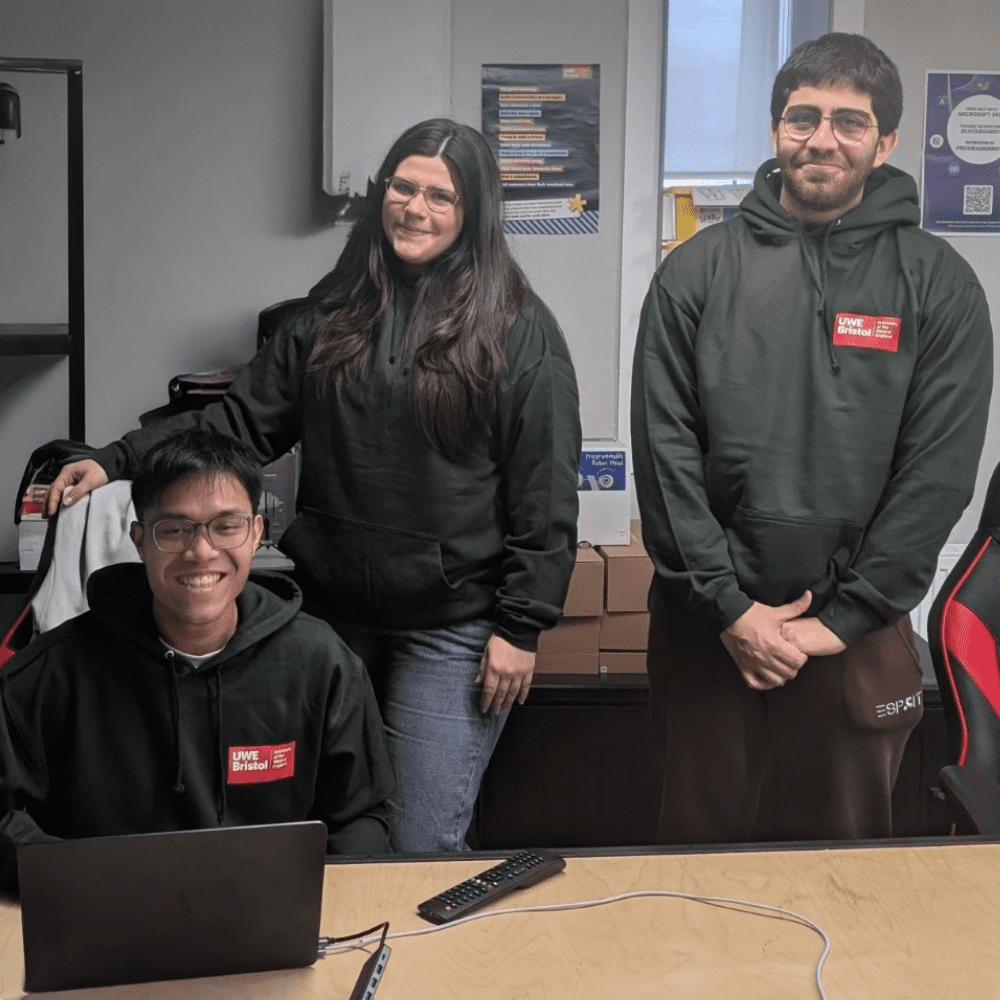
As part of UWE Bristol’s transition from Blackboard Original to Blackboard Ultra, we worked closely with student partners to support academics, shape design decisions, and keep the student experience at the centre of the project. To reflect on that experience, I recently sat down with Mickel Georges, a third‑year Computer Science student and Student Digital Leader, to talk about what it was like to work on a major institutional digital change project as a student.
From student to partner: stepping into the project
Mickel joined the Blackboard Ultra project as part of a wider group of student partners working across the summer period. These students were already employed through existing schemes such as Peer Assisted Learning (PALs) and Student Digital Leaders, which meant we could focus on developing their confidence, skills and understanding of the project quickly.
In our conversation, Mickel reflected on how different the experience felt compared to more traditional student work. Rather than being brought in to complete narrowly defined tasks, students were trusted to engage directly with academics, review module sites, and give honest, constructive feedback.
For Mickel, this shift from student to partner was central to the experience. Being part of design discussions, rather than commenting after decisions had already been made, helped build confidence and a sense of responsibility for the outcomes of the project.
Supporting academics during the Ultra transition
During the transition period, student partners played an active role in supporting staff as they moved their modules into Blackboard Ultra. This included:
- Running bookable one‑to‑one sessions with academics
- Reviewing module structure and layout from a student perspective
- Supporting work on the Ultra module template
- Contributing to student‑facing guidance and training materials
In the conversation, Mickel talked about how working directly with academic staff was both challenging and rewarding. Communicating clearly, tactfully and confidently required practice, but it also developed skills that aren’t always visible in academic modules – particularly professional communication and digital consultancy skills.
Importantly, many academics commented positively on hearing directly from a student who was not familiar with their module. That ‘fresh eyes’ perspective often surfaced issues staff hadn’t noticed themselves.
Learning by doing: skills, confidence and employability
One of the strongest themes in the conversation was how much learning happened through doing the work itself. Mickel described gaining a much deeper understanding of Blackboard Ultra by applying training in real contexts – reviewing modules, answering questions, and contributing to live project work.
Alongside technical confidence, the project provided opportunities to develop softer skills:
- Communicating with a wide range of staff
- Giving feedback in a professional and supportive way
- Working collaboratively within a mixed student–staff team
- Understanding how large digital projects operate at institutional scale
As Mickel noted, seeing how individual actions feed into wider change helped make the project feel purposeful, rather than abstract. Contributing to resources used by thousands of students reinforced the value of student involvement beyond consultation exercises.
Why student partnership mattered
From an institutional perspective, student partnership increased capacity during a critical phase of the Ultra transition. From a student perspective, it created opportunities for meaningful contribution and development.
Our conversation highlighted several reasons this model worked well:
- The bulk of the work took place over the summer, when students had availability
- Support was delivered largely online, enabling flexibility around location
- Students were visible and trusted, not hidden behind staff‑only processes
- Time was invested early in training and context‑setting
Crucially, students were treated as colleagues rather than helpers. That shift in mindset shaped how confidently they engaged and how seriously their contributions were taken.
Reflections and next steps
Listening to Mickel reflect on the project reinforced the value of student partnership during large‑scale change. Students don’t just increase delivery capacity; they improve the quality of decisions, support, and design – while gaining skills that directly support employability. We should go out of our wasy to make it easy for students to get involved with University projects, utilising all the different skills sets and subjects to create a pool of talent that supports not ony the University projects but the employability of our students.
As digital transformation continues across higher education, creating structured, supported roles for student partners should be seen as part of the solution, not an optional extra.
Resources
UWE staff presented on ‘Project to practice: Students as co‑creators in the future of Blackboard’ at the recent Blackboard User conference in Durham.