
For students beginning university, ‘home’ can suddenly become a more complicated idea. Many are living away from home for the first time, meeting new people and beginning to make a home for themselves in a new city.
Creative Contexts is a shared Screen Industries Cluster module that introduces students to the knowledge, research and skills expected within the creative industries. As part of the module, a Research Day on 8 October 2026 used Bristol itself as a setting for exploring some of these ideas.
Module leader Dr. Patricia Francis designed a route and series of tasks that took students around Bristol city centre and harbourside. Using Seppo, students worked in teams to find locations and complete activities connected to Bristol’s people, places, culture and history.
The theme running through the day was ‘home’. What does home mean to different people? Is it simply somewhere we live, or can it be a community, a sense of belonging or a relationship with a particular place? What about those who have several places they consider home, different experiences of home, or no home at all?
For students who had only recently arrived at university, these were particularly relevant questions. As Patricia explained in the introduction to the activity, its purpose was to help students become more familiar with “the city you will call home for the next three years”, while also helping them to get to know each other a little better.
Using Seppo to take learning out into the city
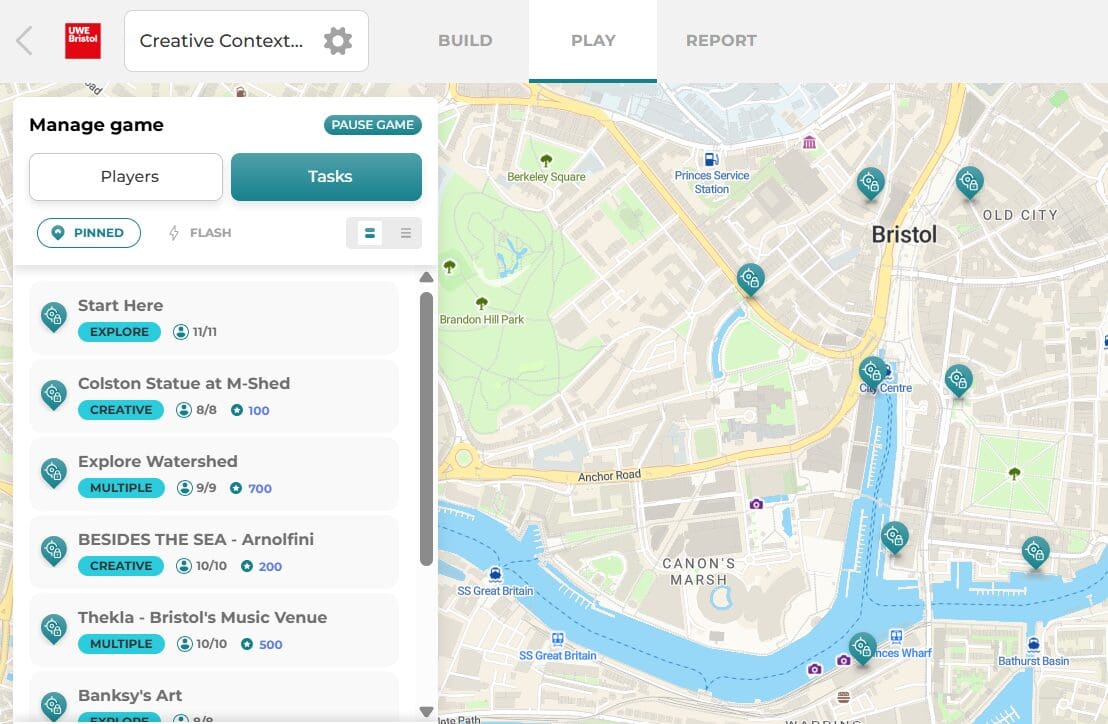
Seppo provided a digital framework for turning Patricia’s route around Bristol into a structured learning activity. In Seppo, this type of activity is referred to as a ‘game’, bringing together the different locations and the tasks students were asked to complete as they explored the city.
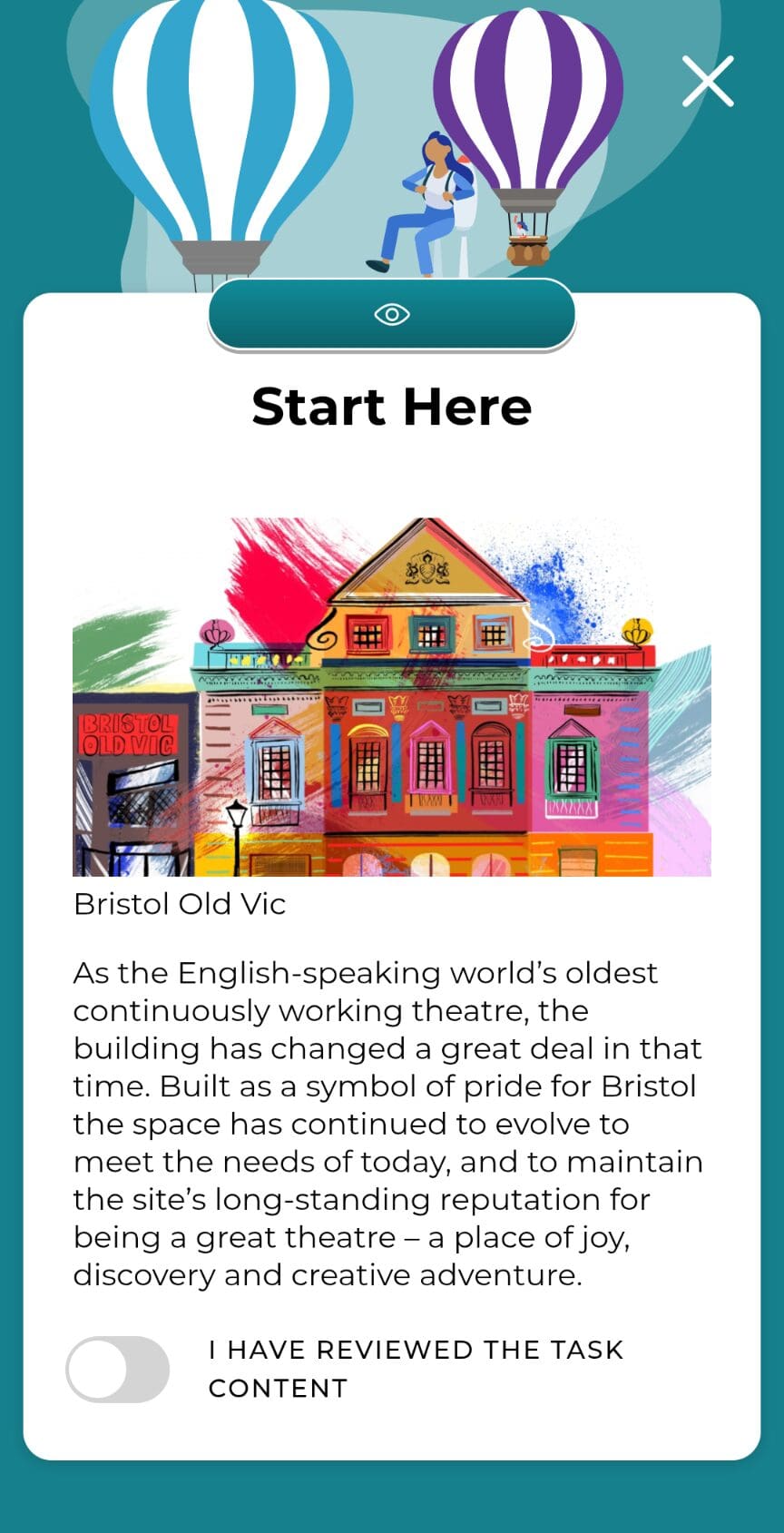
Students met at Bristol Old Vic at 9:30 before setting off in their teams. There was no app to download. They accessed Seppo through the web browser on their smartphones, using a PIN supplied beforehand. With location services enabled, students could then use the activity as they travelled between locations.
Thirty students signed into Seppo, although the number participating was higher because students were working together in pairs and groups.
Preparation for using Seppo was supported by Oliver Haslam from the Digital Learning Team, who provided training and pedagogical support ahead of the Research Day. Oliver also joined Patricia and the students on the day, providing technical support where needed and giving staff additional reassurance while using the technology in a live activity around the city.
The technology, however, was only the framework. The learning came from the route Patricia had devised, the places students encountered and, particularly, the questions and activities she designed around them.
Exploring Bristol’s stories and spaces
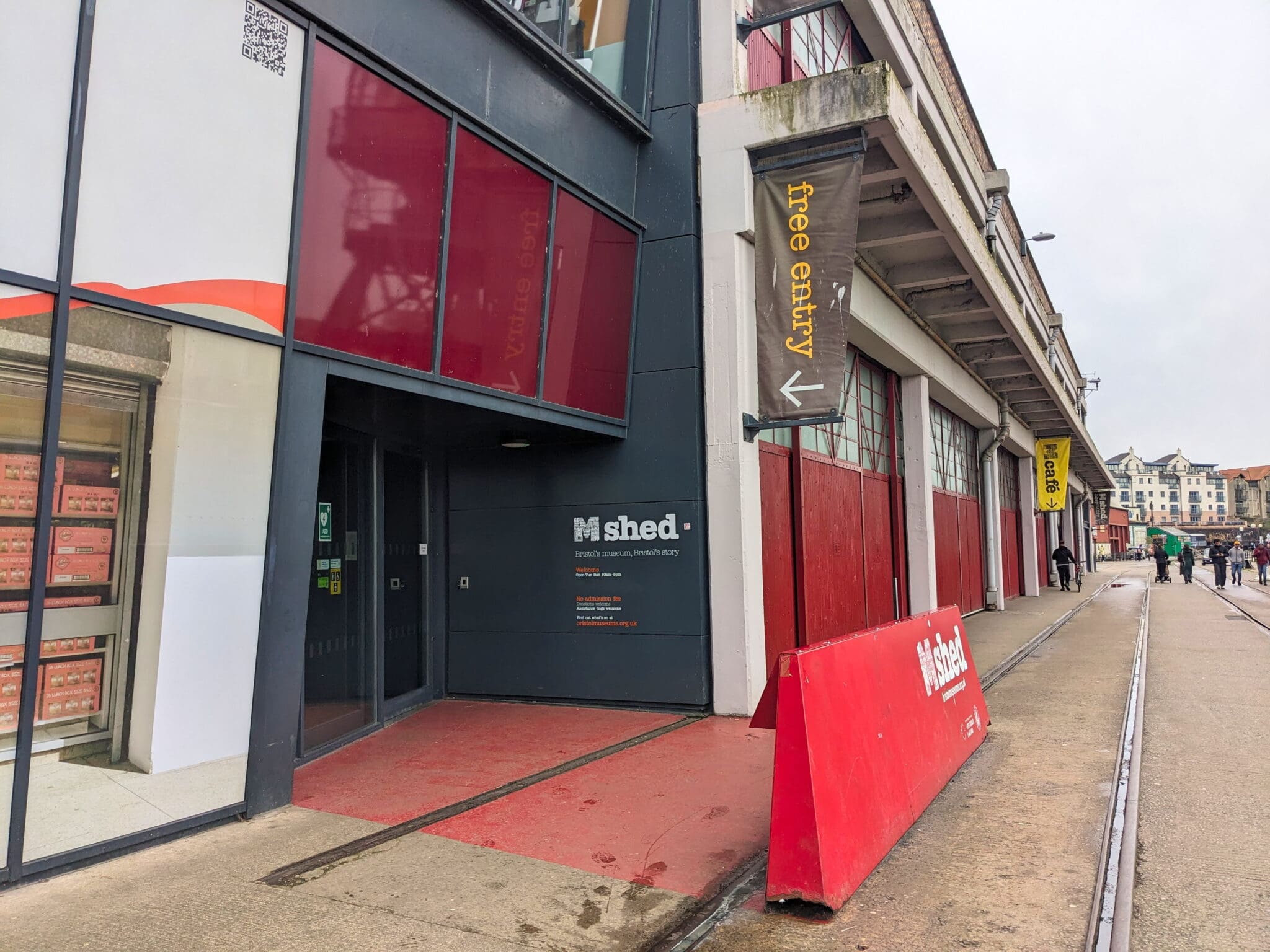
At M shed, students visited the statue of Edward Colston, toppled and thrown into Bristol Harbour on 7 June 2020. After seeing how the statue is now displayed and exploring other acts of rebellion represented in the museum, students were asked to consider what they thought should have happened to it. They could respond in different ways, including writing their ideas, making a short audio or video recording, or uploading an image.
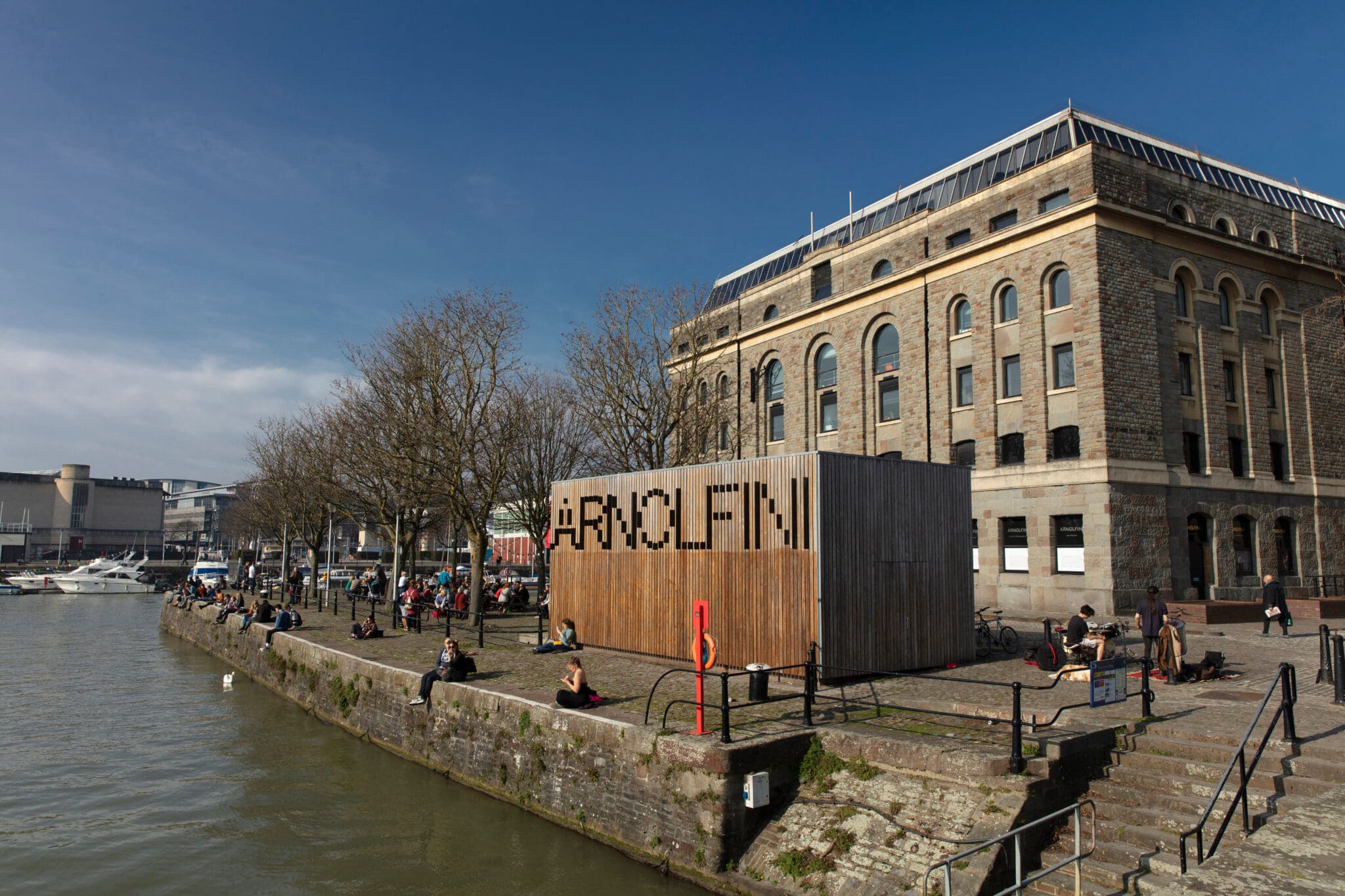
Elsewhere, students explored some of Bristol’s creative and cultural organisations. At Watershed they researched the organisation and its work, while a visit to Arnolfini provided a particularly direct connection with the theme of home. After encountering the BESIDES THE SEA exhibition, which brought together work by young artists based in Bristol and Weston-super-Mare, students were asked to reflect on the exhibition in relation to their thoughts about ‘home’.
The route also incorporated Bristol’s music and creative industries. At Thekla, students photographed or filmed the converted cargo ship and researched artists playing there during October. Other challenges encouraged them to discover Bristol street art, investigate a production company on St Stephen’s Street and complete an activity connected with Bristol Beacon.
More than a location-based quiz
Although Seppo uses the language of games, this activity went beyond simply finding locations and answering quiz questions. Depending on the task, students might be asked to research information, make a judgement, write a reflection, match images or capture photographs, audio and video.
This meant that exploring the city was part of the learning itself. Rather than reading about these places in a classroom, students encountered them directly and responded to questions and activities while they were there.
Working in teams was also an important part of the design. Navigating the city and tackling the activities together gave students a shared experience at an early point in their university lives, supporting the Research Day’s dual purpose of exploring Bristol and getting to know one another.
Making a new city feel like home
There was, of course, no single answer to the question of what ‘home’ means. That was part of the point.
The Creative Contexts Research Day used Seppo to connect a broad and potentially personal theme with students’ immediate experience of arriving at university. Bristol became more than the backdrop to their studies. Its cultural organisations, public spaces, communities and histories became material for exploration, conversation and reflection.
For students beginning to establish a new life in Bristol, the day offered an opportunity to discover more about the city and each other, while beginning to think about what, and where, we call home.