

Simon Emberton is a Senior Lecturer in Digital Media in the School of Computing and Creative Technologies at UWE Bristol. For the last eight years he has taught a first-year programming module where students build creative digital projects such as audio-visual artworks, games and interactive web experiences using JavaScript. The module focuses on helping students develop the core building blocks of coding, while creating something original and engaging.
In this case study, Simon explains how a first-year programming module was redesigned to focus on assessing student understanding rather than simply evaluating the final submission. The Digital Media team have been faced with the challenge of generative AI tools producing convincing code and supporting assessment completion, and have introduced short code vivas that require students to explain and discuss their work.
Like many educators, I’ve been thinking about the growing impact of generative AI on assessment. Large language models are now extremely capable of generating code, which has created new challenges around academic integrity, but also presented us with new opportunities to rethink how we assess learning.
The problem
Students finding shortcuts is nothing new. Before generative AI became widespread, we occasionally saw students copying code from online examples and presenting it as their own work. To address this, we had already built several safeguards into the assessment process into our first year module. Students researched their ideas, produced hand-drawn sketches before coding, maintained weekly journals, attended support sessions, added detailed code comments and recorded video demonstrations explaining their work.

These approaches worked well for students who engaged consistently throughout the module. However, there was always a smaller group of students who remained largely absent during teaching sessions and then submitted completed work at the deadline. With the arrival of generative AI, the challenge became much bigger. AI can generate code comments, help script presentations and create large portions of a submission in a matter of minutes. Rather than trying to determine whether AI had been used, the bigger issue was that we were primarily assessing the final artefact rather than the student’s understanding of it.
The solution
Instead of trying to make the coursework itself AI-proof, we shifted our focus towards assessing understanding. The key change was introducing a short, mandatory code viva worth 30% of the assessment. This replaced the previous video demonstration and became an important component of the overall assessment strategy.
During the viva, students talk through their project and explain aspects of their code. We might point to a particular section and ask what it does, how it works, or how they would modify it. The questions are straightforward and focus on understanding rather than memory recall. Very quickly it becomes clear whether a student genuinely understands the work they have submitted.
The viva also gives us flexibility. Sessions are conducted individually rather than in front of the whole class, can be rescheduled where necessary, and can be delivered live online if students are unable to attend campus. The aim is to create a supportive conversation rather than a stressful experience.
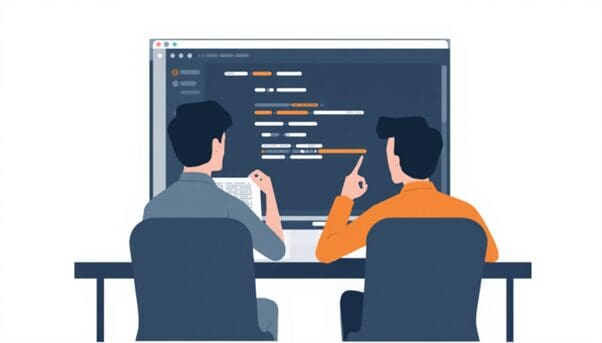
Importantly, these changes were implemented within the existing module specification, without the need for module revalidation, demonstrating that meaningful assessment redesign can often be achieved through adjustments to assessment structure and weighting.
Challenges
The biggest challenge is scalability. This approach works well with our cohort sizes of around 20-30 students, but it would become much more difficult to manage with significantly larger student numbers. Even short five-minute conversations quickly add up when working with large cohorts.
There were also some initial implementation challenges. In the first year, a small number of students underestimated the weighting of the viva and failed to attend. In a few cases, students struggled to explain work they had submitted, leading to difficult conversations about ownership and understanding of their projects. However, these situations helped reinforce the importance of clear expectations and communication.
Feedback from staff and students
One of the most encouraging outcomes has been the positive impact on student engagement. Knowing that they will need to discuss and defend their work encourages students to engage more consistently throughout the module and take ownership of their learning. Students quickly recognise that understanding their work is more important than simply producing an end product.
From a staff perspective, the approach has also streamlined marking. Because we review projects and discuss them directly with students during the viva, much of the marking and feedback can take place in real time. This has reduced the amount of post-submission marking while giving us greater confidence in the authenticity of student work.
As a team, we’ve also adopted a balanced approach to AI use. We don’t prohibit students from using AI tools. Instead, we encourage them to use AI as a learning aid and development tool, provided they can explain and justify the work they submit. AI becomes a tutor rather than a proxy. We know that it is important for students to actively learn to work with AI coding agents because that’s what graduates will encounter in industry.
Next steps
The next stage is to help students become more familiar with the viva process earlier in the module. One idea is to introduce low-stakes mini vivas during the term, allowing students to practise explaining their work and receive formative feedback before the final assessment.
We’re also interested in exploring how this approach could be adopted across other modules within the Digital Media programme. Developing a more consistent programme-level approach could help students become comfortable with this style of assessment while maintaining a strong focus on understanding and authentic learning.
Top 5 tips
- Assess understanding, not just outputs. Focus on what students know about their work rather than solely on the artefact they submit.
- Keep vivas short. Five minutes is often enough to establish whether students understand their work. Longer sessions can become difficult to manage.
- Test understanding, not memory. Questions should explore how and why students made decisions rather than requiring them to recall information.
- Be clear about AI expectations. Define what forms of AI use are acceptable and encourage transparency about how tools have been used.
- Build assessment confidence gradually. Consider formative or “mini viva” opportunities so students understand the process before the final assessment.
Key takeaway
The most important lesson for me has been that in the age of AI, the focus should shift from assessing the submitted work to assessing the student’s understanding of that work. When we do that, AI becomes less of a threat to assessment integrity and more of a tool that can support learning.
Resources
- AI-Proofing Assessment – slides from the UWE Learning and Teaching event